Japan–China Tensions: The Emerging Signals and Impact on India and US-India relations
27 Nov 2025
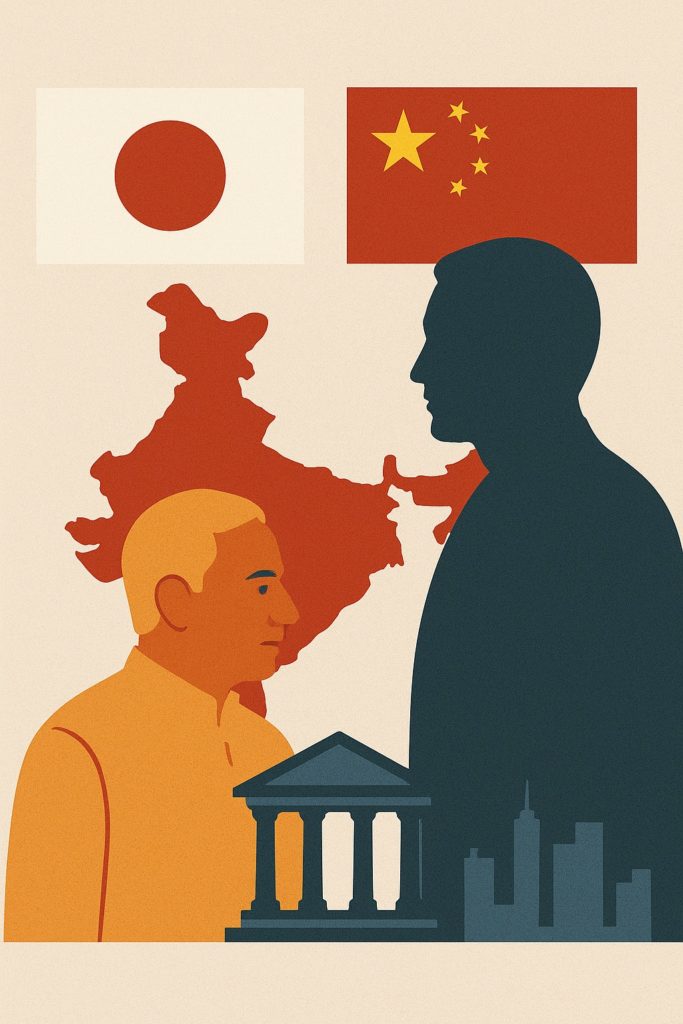
The flare-up began on Nov. 7, when Japanese PM Sanae Takaichi told her parliament that a Chinese military attack on Taiwan would be an “existential issue for Japan” – justifying a Japanese armed response. China responded with sharp diplomatic protests, military posturing, economic signaling aimed at reminding Tokyo of its vulnerabilities and swaying public opinion in Japan against Takaichi.
China today looks a lot like the United States in the late 1870s – when America emerged as the world’s biggest industrial power. Back then, Washington loudly rejected imperial ambitions and railed against colonialism, much like China does today.
Yet as the U.S. grew stronger, its behavior shifted. It eventually annexed the Philippines in 1898, and despite global criticism, began formal colonial rule in 1899.
Machiavelli captured this pattern perfectly:
“A weak man advocates pacifism so others won’t harm him; once he becomes strong, he begins to harm others.”
The pacifist becomes the predator.
Today, China’s GDP in purchasing power parity terms is 33% larger than that of the US. It is now the world’s leading industrial power – while still speaking the language of a “rules-based order.” We hope it keeps its promises. But what if it behaves exactly as Machiavelli suggests most powerful states eventually do?
China’s sharp reaction to PM Takaichi’s comments hints that Beijing may be planning the Taiwan “endgame.” The recent sabre-rattling on Arunachal Pradesh with India is also perhaps to keep India busy in its backyard rather than letting it contemplate any covert role in the Sino-Japanese spat.
Japan doesn’t seem willing to back down.
PM Takaichi clarified but did not retract her statement despite multifaceted coercive pressure.
What Does This Mean for India?
1. India gains strategic breathing room.
With Beijing now forced to manage this new Japan front, pressure on India’s northern borders temporarily eases. A valuable window opens for New Delhi to strengthen capabilities.
2. India’s value to the United States increases.
New Delhi’s recent message that the QUAD should remain “inclusive” signals that India isn’t wishing outright hostility with China. That makes Washington even more eager to keep India close – primarily through its strongest remaining chord: commerce.
A US–India deal may now move faster than expected.
The Bottom Line
Japan-China tensions are part of a broader Indo-Pacific realignment. And this moment quietly benefits India with:
A. More strategic bandwidth
B. Greater leverage with the U.S.
C. A stronger role as a regional balancer and the possibility of being a middle power that can globally act as the connective tissue holding multiple coalitions together.
PS: If you like my content, please join my YouTube channel. Thanks to everyone who subscribed- 50,000 now!
Including a link for those who prefer to watch it on my channel : https://youtu.be/VBpix3oQdLM